With thanks to 12352 Chris “chwylms” Willmes
It’s all in the delivery
In the autumn following graduation, those of us of the MARS persuasion found ourselves on the west coast engaged in the fourth and final phase of MARS training, part of which was spent at sea in the ships of the Fourth Canadian Destroyer Squadron (CANDESRON 4). The very first night at sea I stood watch on the bridge for the “mids” (i.e., the middle watch, from 0000 to 0400). I was under the tutelage of the ship’s Deck Officer (DeckO), a crusty old salt who must have been at least thirty years old, a veritable ancient mariner. My mentor was schooling me in the fine art of keeping track of all the other vessels in our vicinity, plus the navigational picture; “situational awareness” as our brethren who have made a career out of turning aviation turbine fuel into noise would say. A key part of this is keeping tabs on the relative motions of all the vessels in the vicinity and determining which of those might approach too closely and pose a risk of collision. The interactions between vessels is not a simple case of who is driving the bigger boat (see https://youtu.be/KmQYzCyNBDs); they are governed by nautical “rules of the road”, the International Regulations for the Prevention of Collisions at Sea a.k.a. the COLREGS.
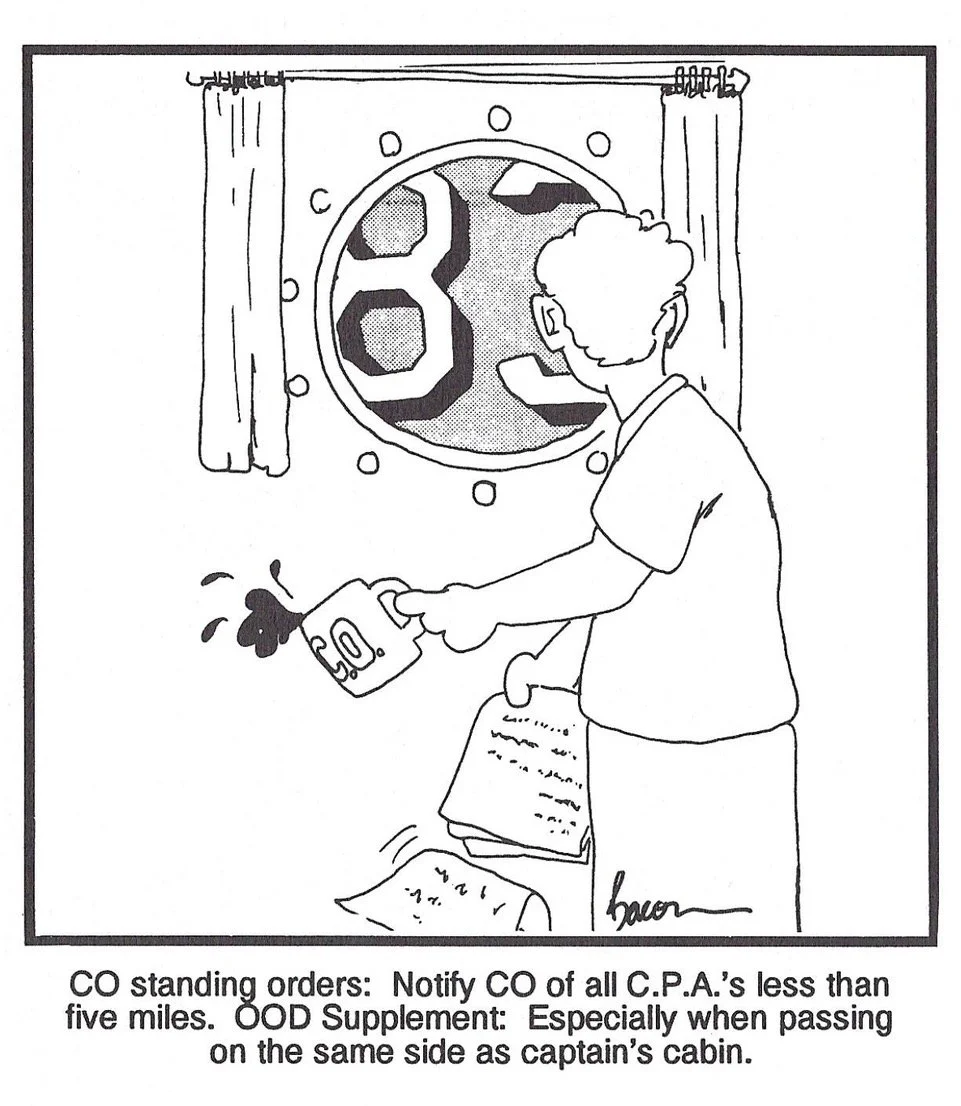
Concomitant with avoiding collisions, allisions, and groundings is the requirement for the officer of the watch (OOW) to keep the captain apprised of what’s going on, in accordance with his standing orders and any amplifying orders which he leaves for the nighttime OOWs. While the OOW exercises charge of the ship on the captain’s behalf, the latter retains always command, and thus is ultimately responsible for any mishaps.
There are any number of reasons for disturbing the captain’s slumber, including altering course as per the navigational plan, making landfall, an engineering casualty, fire, grounding (a special kind of making landfall), changes in the visibility, the outbreak of World War III, the ship being dragged beneath the waves by a giant kraken, etc., etc. The most common reason — during peacetime cruising, at least — is to advise the captain of an approaching vessel whose “closest point of approach“ (CPA) would be inside a certain minimum distance set out in the captain’s standing orders, or which might require the OOW to manoeuvre the ship to avoid collision, in accordance with the COLREGS. There is a prescribed format for making such reports, designed to express the pertinent information clearly and succinctly, so that the captain, roused from Morpheus’ embrace, can readily grasp the situation, and either approve of the OOW’s recommendations, or give appropriate direction.
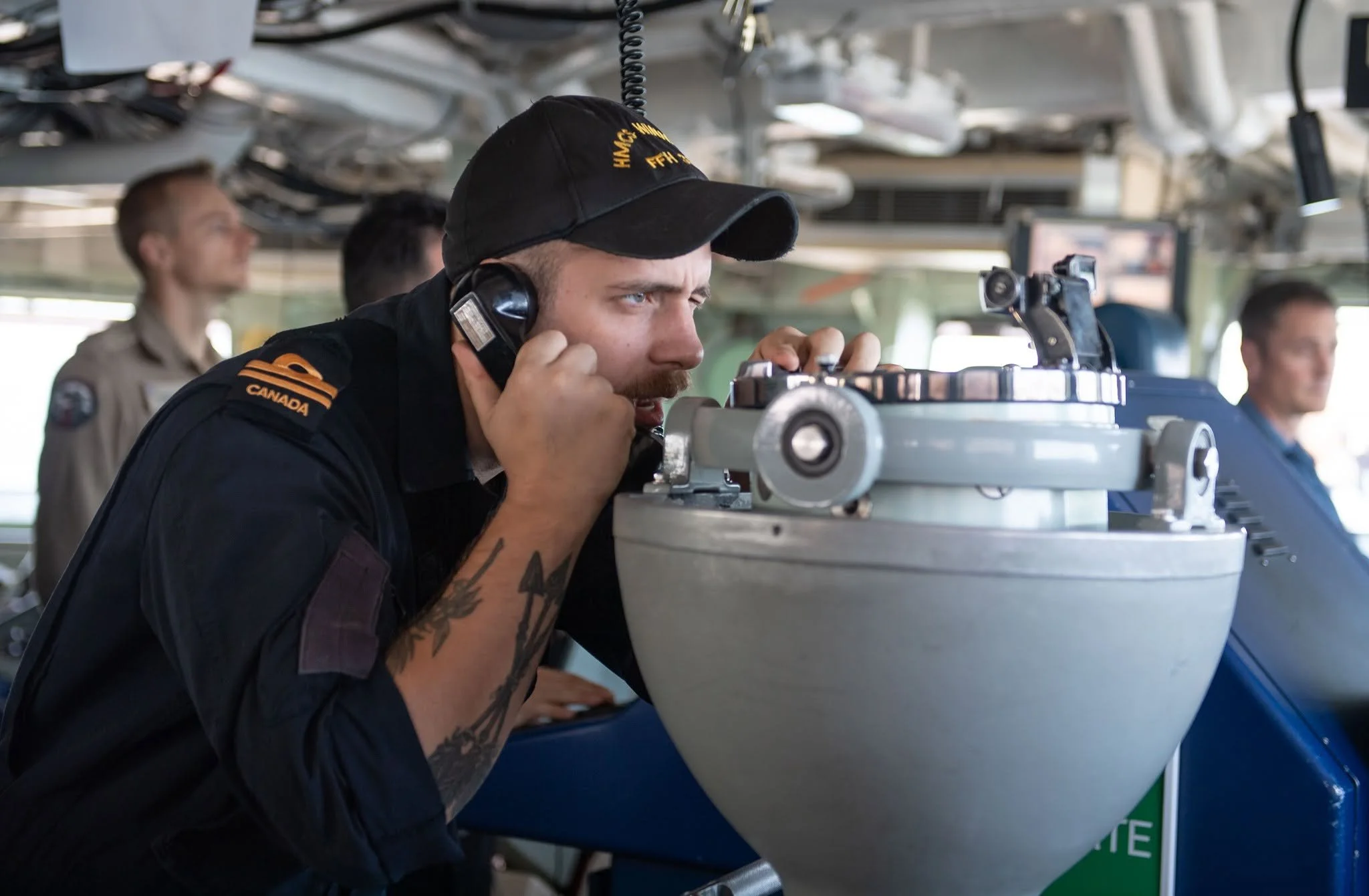
*Note: A pelorus is a nautical navigational instrument for taking bearings of landmarks, ships, aircraft, or other objects, and celestial bodies. It consists of a gimballed circular gyrocompass repeater with an azimuth circle or other sighting device. It is typically mounted on a pedestal or bracket affixed to the ship’s structure.
We were transiting the southern reaches of the Strait of Georgia, in the vicinity of Vancouver, a busy seaway, and there was no lack of suitable candidates on which to hone my reporting skills. In these waters, the captain’s standing orders required that he be called for any closing contact with a CPA of less than one nautical mile.
A “contact of opportunity” presented itself. I carefully took a bearing of the other ship’s navigation lights from the centreline pelorus* then stepped over to AN/SPA-4 range-azimuth indicator (a display that presents the picture from any one of the ship’s radars) and determined the range to the contact. After a minute or so of visual and radar observation, I determined the range and bearing of the contact’s CPA. The other ship, which was broad on our port bow, would pass safely down our port side; its CPA would be on our port quarter. The watchkeepers in the operations room, one deck below the bridge, who were tracking all of the nearby radar contacts, confirmed my assessment, and also calculated the other ship’s course and speed, and the time of CPA. No action was required on the part of either vessel to avoid collision — as we had the right of way IAW the COLREGS, the correct course of action was for us to “stand on”, i.e., maintain our course and speed — but the CPA was going to be just inside one nautical mile, so it would have to be reported to the captain. Mentally I composed my report, and I rehearsed it with the DeckO. Satisfied that I had all of the requisite information, in the right order, and that I had the appropriate recommendation for collision avoidance, he told me to go ahead and call the captain.
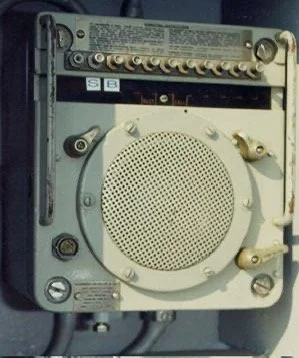
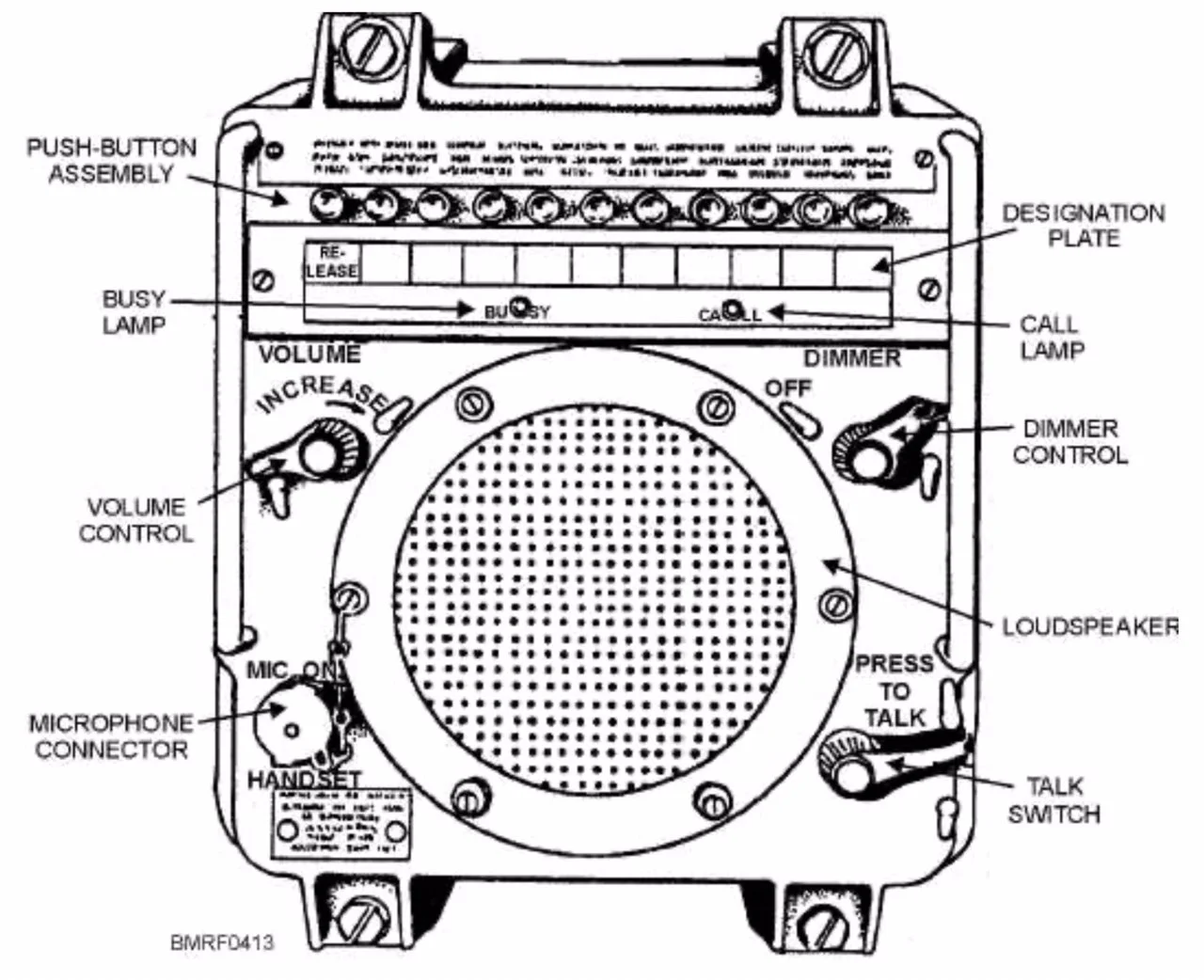
the ic/kaa intercom box. Sci-fi enthusiasts will note that it bears a remarkable resemblance to the intercom on the bridge of the Battlestar Galatica.
The destroyers had an intercom system, the IC/KAA, that connected the bridge to various locations within the ship, such as the operations room, the electronic warfare control room, etc., etc., and the captain’s cabin. The terminal was a cube about ten inches on a side, bolted to the deckhead (ceiling) directly above the SPA-4. On its face across the top was a row of selector buttons, plus some indicator lights, a volume control, a “press to talk” lever, and a speaker in the centre.
With some trepidation (this was my first time calling the captain) I reached up, pressed the selector button for the captain’s cabin, keyed the “press to talk” lever, and said, “Captain, Sir, Second Officer of the Watch.”
“Captain” came the reply, sounding remarkably alert for someone woken in the middle of the night.
I recited my report, telling the captain the range and bearing of the other ship, its visual aspect, its course and speed, and the time, range, and bearing of its CPA. Having got all that out without stumbling or forgetting anything, I confidently ended the report with, “recommend standing on, Sir.” The captain replied, “Roger; call me when he’s at one mile.”
When I was finished, the DeckO allowed as how I had done an adequate job. Over the course of the watch, I made several more contact reports. As it turned out, no manoeuvring was required, and so each time I recommended standing on. After the fourth or fifth report the DeckO opined, ”you know, it doesn’t really matter what you say to the captain; he’s not actually hearing you. You could say just about anything, and you’d get the same response.” I voiced a rather earthy epithet that concisely expressed my disbelief and skepticism. “Okay” replied the DeckO, “watch this.” He was comfortably ensconced in the captain’s chair next to the SPA-4; he leaned back, reached over to IC/KAA box, punched the selector button for the captain’s cabin, keyed the “press to talk” lever and intoned, “Captain, Sir, Officer of the Watch.”
“Captain” came the reply.
DeckO: “Captain, Sir, you’re a goddamn son of a bitch.”
After the briefest of pauses, the captain replied, “Roger; call me when he’s at one mile.”
And there, as they say, ended the lesson.
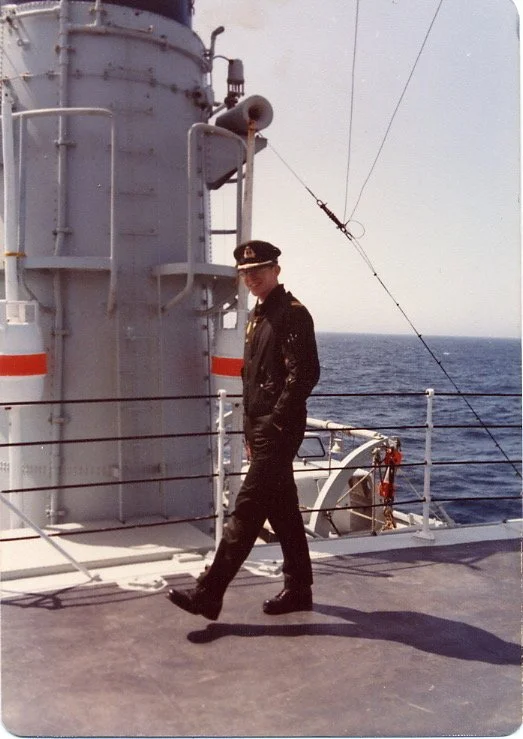
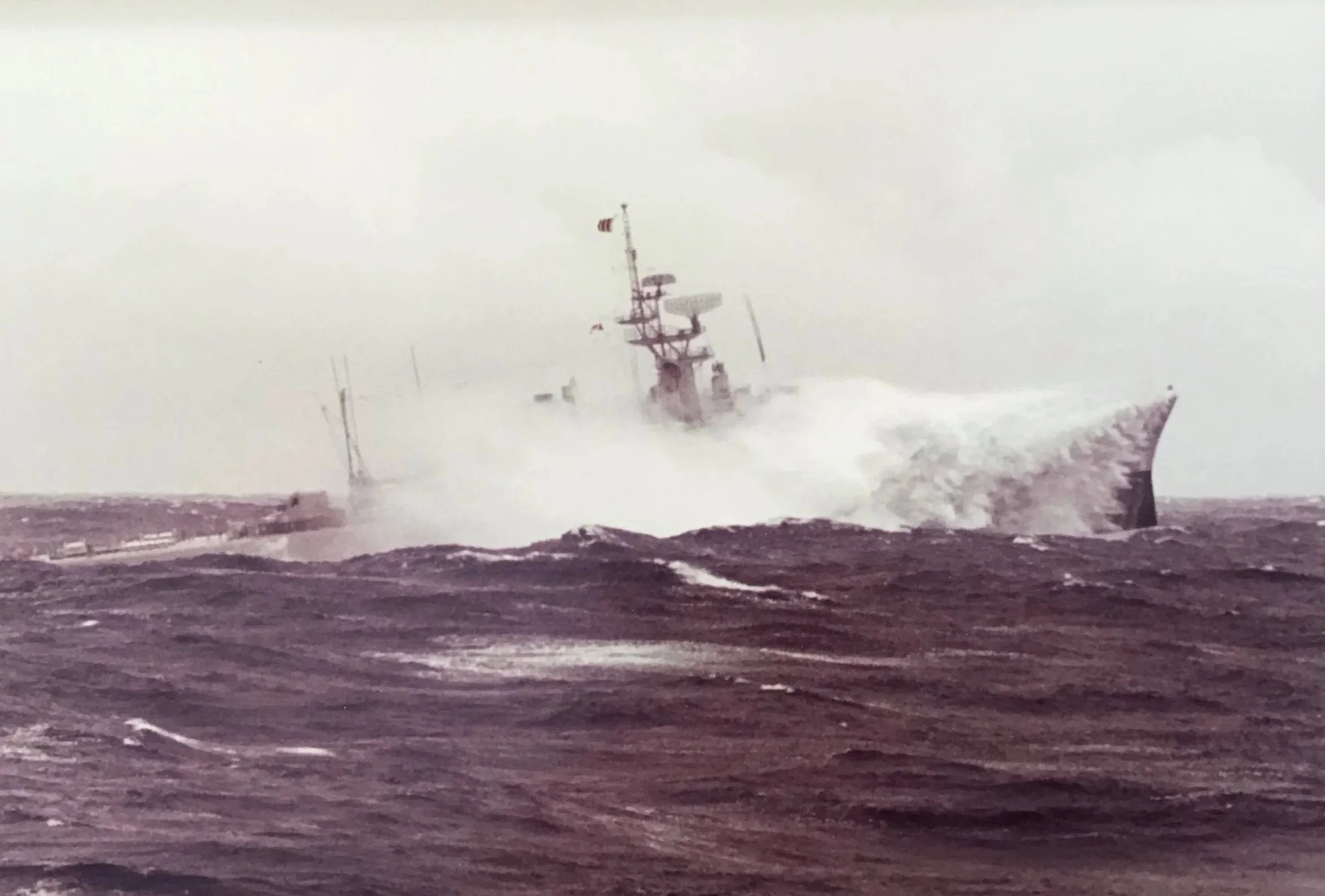
Your humble narrator, promenading on the flag deck of the CANDESRON 4 destroyer HMCS SASKATCHEWAN some years later when he was the DeckO.